
2025 December round up – Oh deer, oh deer edition
Welcome to the December round-up newsletter. A monthly letter about everything that has happened inside and outside the tea nursery. This is a long one, brew a pot and dive in.
Wrapping up
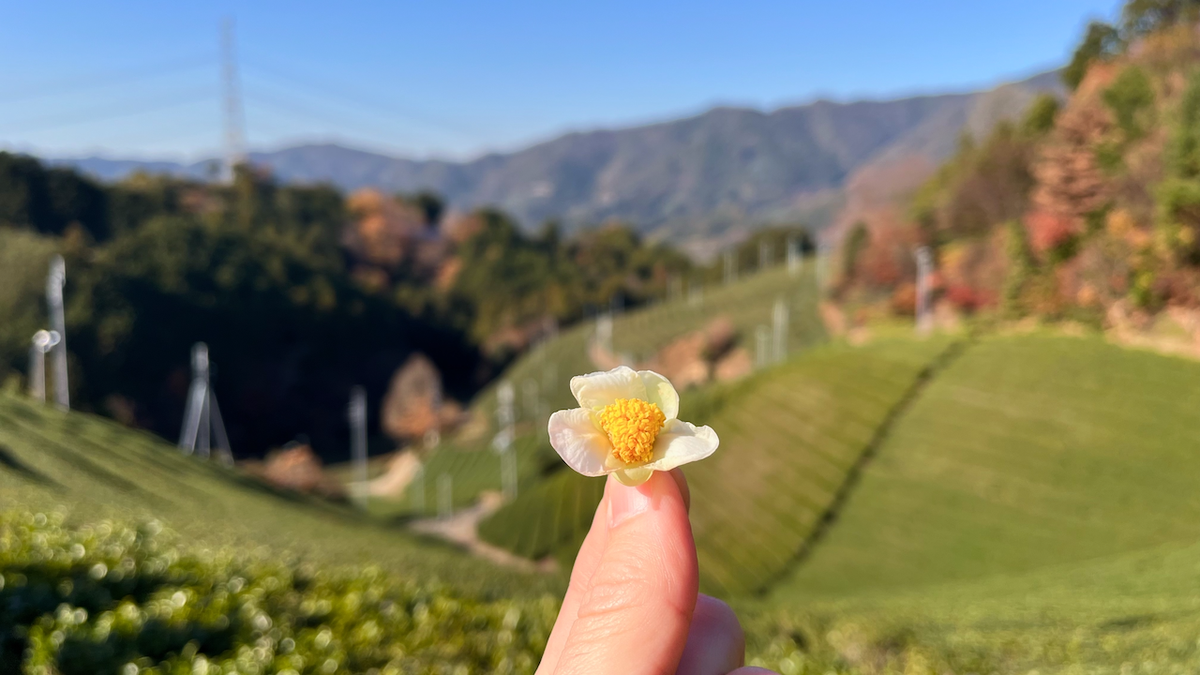
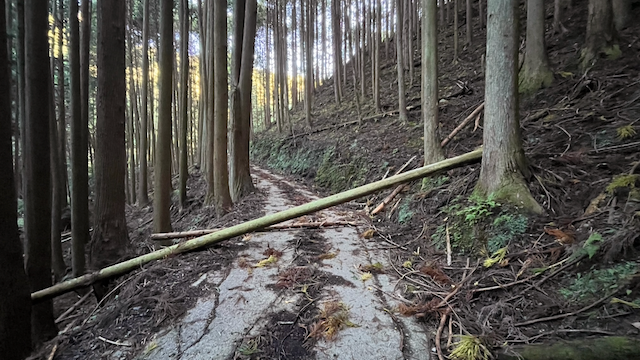
After a crazy year, we are finally wrapping up the season. For a brief time, I will focus on resting before working on the fields again after the New Year’s celebration. Preparing for another spring that will slowly arrive. The bears start to hibernate, the deer howl, and you can find their antlers in the forest if you are lucky. The weather has been damp and cold, although relatively warm on some days as well. We just saw the first streaks of snow a couple of days ago. The forest is red no more, just brown, sleeping, cold, and damp.
Recent Activity
I have been taking a break to focus on studying for the Chinese tea course I am currently enrolled in, as well as another course I joined, the Sake Scholar Course. You can follow my progress on my other side project. In one, I am learning about Chinese tea, processing, its history, and getting to try many excellent teas I have not experienced before.
On the other hand, I am diving deeper into a newly found interest in sake. The SSC goes beyond the drink itself, exploring all its tangibles and intangibles. Rice strains, yeast strains, geography, regional cuisine, regional history, and much more. This broader cultural context is something I've been missing in my tea journey, and it's largely absent from any Japanese tea education materials out there, at least in depth. The hefty 430+ page course book is informative, graphical, and dives deep into Japan itself. Sake is a topic treated in the book, of course, but it also presents the following questions. Which I have adapted for you to tea here to ponder this winter.
On terroir and Japanese tea — do we dare? Do concepts of terroir and regionality have any application to the world of tea?
Historically, tea makers have focused on making better tea. Exclusively devoting themselves to simply perfecting tea-making. Not making tea to cater to regional flavour. However, tea is freedom, and constantly evolving… Some farmers and processors have started adopting approaches that parallel winemaking, or mannerisms like speciality coffee on the retail side of their operations.
I would love to hear your thoughts on this topic. You can reply to the newsletter or leave a comment below. I read all of it. You can also join our Discord server and participate in the conversation.
What’s next
I just finished updating all the current cultivar posts and also adding them to the book. Now both the website and book are finally in sync. I am currently preparing an article on Kirari 31, a cultivar I have been seeing more of lately. On one side, farmers finally start being able to use those fields they planted some years ago, as is the case for a couple of farmers in Wazuka I know of. On the other side, maybe due to the matcha shortage, people are just trying new things. Nonetheless, it is an interesting cultivar. To me, it always has a note that reminds me of a savoury like York ham, sweet, slightly cured meat, for some reason.
Upcoming 2026 projects
While I continue with the tea and sake course, my next semester at university, and the new season at the farm, I will gather more material for the next project, Food Where Tea Comes From. Exploring the tea regionality, or not, in different regions, while having a look at the land, culture, water, and other factors. If you have any particular prefecture or area you would like me to explore first, please let me know!
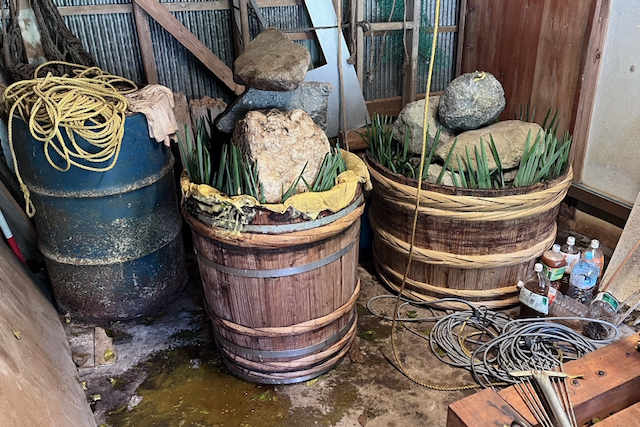
On the first weekend of February, I will be joining, for the second year, the Kioke Craft Revival Project. A group of carpenters and brewers preserving the old methods of making Kioke, the traditional open-top barrels used in soy, sake and miso production, among others. Why this? Well, these same barrels, although at a smaller scale, are used in goishicha and awabancha tea production. I am pleased to have secured a small 10 kg kioke to make some tea next year.
I am excited to ferment some black tea in the spring and awabancha in the summer. Perhaps also try making Kancha this winter if I find someone willing to teach me the method. Kancha is a sadly dying art, with some villages having only one producer left. I’ll share more about it later in the year.
Books, podcasts and teangential stuff
If you are travelling around to visit family and friends or just spending time abroad, you might need some books or podcasts you can carry with you. Either while travelling or at those extended family and friends gatherings (we all have been there). This time, I want to recommend a couple of podcast episodes that will make you think a bit about certain tea topics, but first, let's talk salt.
The book
What started as an incredibly thoughtful present during the winter holidays in 2024 set the theme for an entire year of discovery, then full-blown obsession with salt. I was gifted a Japanese book on salt, its different producing salt areas and methods, different ways to harvest it (did you know you could get salt by just burning seaweed?) and a sprinkle of salted history inside and outside of Japan. Alongside the book, I was given six small vials of different types of salt, which I hold dearly.
This time around, I would like to recommend that you read the book I was gifted this year instead. Salt: A World History by Mark Kurlansky. The book opens with Cardona, a salt mining village just 30 km from where I was born in Catalonia, which made me laugh. Cardona is an ancient powerhouse salt mining village I had the "pleasure" to work in during my summer breaks, delivering heavy boxes of food and drinks to several bars and restaurants that populate its steep hills. Then the book continues to narrate the uses of salt across the globe, in ancient history and also in more modern times. I still have to finish reading the book, just got started some days ago, but I am completely absorbed by it. From how it became a survival essential tool once agriculture developed, to how it became a tax, to how humanity completely missed the fact that salt is actually pretty much everywhere. The story of salt is just about the history of humanity as well. Not many products go as far back as salt, maybe, just maybe, tea is a close runner-up.

The podcasts
On the podcast menu this month, I have two recommendations. Firstly, Ryan and Sam from Specialty Matcha Podcast made a great episode back in the summer, worth re-listening to. On one side, this episode exposes several ways that consumers are contested with when introducing themselves to matcha. On the other side, it brings to light the importance of context, not only the tea or the preparation methods. Essentially, it explores how we can equip consumers with context and knowledge on how to source matcha for their home or when visiting a café. I think it is worth thinking about it and seeing how this affects or already has affected your journey through tea. We all have an “aha!” moment where a product or education about it clicks.
The audio player unfortunately will not show if you read this in your mailbox ;)
On tea navigation
To me personally, this boils down to equipping people with not what is good or bad, but what does the choice of method imply in different contexts. Why sometimes can't you use usucha grade matcha in a koicha? Why using this particular high-grade matcha in a latte might be a bit of a coin flip every so often. How and when is batching a good thing? These are questions that some other segments of the tea crowd do not know either, the pu'er fans out there might not know about other green teas so much. Japanese tea drinkers like me do not know close to nothing about pu'er, but we can equip each other to understand the context of it. Then make a better guess, not a choice at the beginning, but guesses that build on top of each other.
Tea brands and cafés should guide their customers across this navigation, that is what a sommelier in wine or sake does, or should. In other products it might be called, cheese monger or [insert product] specialist, master, expert, or one I don't really like, connoisseur. In the end, tea categories and grades aren’t relevant, taste is. The type and the grade are something that we use to tag or relate a certain experience range to our preferences and guide them, especially at the beginning.
The role all these product specialists play is rarely defined. In Japan in some industries or particular fields like wagashi, or even salt (yes, salt once more) we call them coordinators or navigators. A fascinating role that blends education, service, and customer experience. In other words, it is equal parts guide, translator, and strategy developer. It guides people with different understanding levels of a product according to their knowledge level, through the product’s meaning, seasonality, origin, processing, etc. Then it translates this product content to the makers, the ingredients, the regional or broader cultural or heritage context. Finally, it helps adapt those to the consumer, adapting the product to new audiences, both respecting but pushing tradition forward, relaying that product to the future so it does not end in a museum.
More importantly, it educates both consumers and brands, chefs, café operators, etc., making sure they choose the right tool or product for the right purpose. To wrap up this tangent, they "navigate" clients through complexity to find what suits their taste, purpose, or curiosity. Something lacking in many places, not just matcha.
As for a second podcast recommendation, I would encourage you to listen to The Coffee Show with Kirk Pearson, a great interview-style podcast about the coffee industry and the people behind it. I love how they tackle interesting and challenging questions like pre-made espressos (espresso batching, baby!), company culture, budgets, virality, and the undervaluation of coffee farmers. In this episode, Kirk interviews Toby Weedon from Oatly, a known oat milk brand, to talk not so much about the company but about their "Future of Taste" report, which looks at trends in service and flavour across the coffee industry.
The audio player unfortunately will not show if you read this in your mailbox ;)
Among those, they talk briefly, but openly about matcha, and before that, houjicha! It is a great conversation about taste trends and preferences. One of the takeaways I took from this episode is not how coffee is being necessarily overrun by matcha, but how they do complement each other, and the need and struggle to rethink how cafés operate. Not only to do a better job at matcha, necessarily, but how the cold drink popularity is pushing the working designs of cafés designed to work mainly as a hot drink delivery pipeline. Another takeaway, houjicha, it has been on the back burner for ages (no pun intended), and the matcha shortage might be a good thing for houjicha being a more than suitable addition to the powdered teas menus across the globe.
The ripple effects of tencha harvesting
Speaking of houjicha, there is only one problem. There is only so much houjicha or bancha. In a world where ideally tencha production goes up next year by lets say 1-3% which is quite a lot, that has to eat some production from other teas. An unspoken truth about the matcha boom is that this year was a highly reactive year for the farms. Farmers switched to tencha hastily, now some are rushing to make shading roof or grinding rooms in their farms and some even thinking on how they can add tencha machinery in their factories etc.
Additionally, there was not enough tencha to go around in spring, many houses paid big on the lots they could get in the auctions, outside the direct contracted farms they work with. Even the price of bancha at the market went up, around double the price. Some farmers with all the volatility decided to hold on their stock and grind it or release it bit by bit to not run out themselves either. It was a heck of a year. November 2025 saw a 60% volume increase in exports compared to 2024 (1247t vs 774t), with powdered tea accounting for 73% of volume and 87% of value. That is in November alone!
As you can see, exports of powder tea are at an all-time high (surprise, surprise). However, if the powder tea market has grown while leaf tea isn’t being exported at the same rate, leaf tea farmers like those specialising in sencha are either not selling as much or not exporting at all. This, combined with a shrinking domestic market, isn’t good news. They are accumulating a lot of that tea because they cannot sell it as readily as before, and green tea is a bit more delicate to store as well, no one usually looks for green tea vintages out there. Furthermore, foreign wholesale accounts are not so profoundly interested in those teas either, at least not as much.
One other piece of this is that due to more tencha being produced, there is slightly less sencha and other leaf types like bancha to go around. Increasing the price of those teas, which again in a declining market, is not good.
What does this have to do with houjicha? Well, on one side when harvesting for tencha you either pick by hand, then trimming the bush, which will not yield any bancha usable leaves. So production is almost none with this method. The small harvest you get would happen through the necessary maintenance of the bushes in summer and autumn, but nowadays, most farmers are also making tencha in those seasons to keep up with demand. In machine harvested fields for tencha we see a similar problem, usually you will harvest down to the most amount of soft leaves you can harvest. Sometimes three to five leaves down, which removes the leaves that would typically continue to grow a bit more, and would be harvested a week or so later for bancha, then most commonly roasted into houjicha. Do we see where the issue is now?
While bancha represents about 20% of the total production according to some reports, its value is generally very low. You can buy bancha or already-done houjicha for ¥500 per bag in some cases. In most restaurant establishments, you might even get it served for free. This means that any small increase in cost has quite the ripple effect on how it gets consumed and, more importantly, traded. Of course, this is at a much more manageable scale than the current tencha and matcha shortages are challenging us, but I do think it is worth keeping in mind. Although perhaps I am just reading too much into this. Who knows, perhaps the most popular way to drink houjicha in a few years will also be in powder form? Who could resist a warm, roasty, chocolaty, perhaps even a bit smoky aromatic latte with low to no caffeine intake? Not me.
These are just some questions worth pondering as we close out the year. For now, we will take some rest here at the farm and gather strength for what seems to be another rollercoaster of a year.
That’s all for this month. As always, you can help the blog by sharing this newsletter or any blog post with friends or family who might enjoy it. If you’d like more insights and to continue the conversation, you can join our Discord server.